

SUSTAINABILITY
I support sustainability practically: I invest in durable craftsmanship and try to avoid fast-fashion waste, while steering clear of global warming, labor and politics debates.
I am committed to sustainable shopping because it directly impacts women’s well-being.
Luxury fashion helps women achieve success by acting as a visual capital — a strategic business tool that translates personal presentation into measurable professional leverage.
However, women are caught between two opposing financial pressures: they are systematically paid less than men while simultaneously being charged more for everyday essentials, including clothing.
A femme fatale —literally translating from French as "fatal woman"—is an archetype of a highly attractive and intelligent woman who uses her charms to achieve her goals. Deemed “dangerous” precisely because she was independent in a world that expected women to be submissive.
Luxury and fast fashion is designed to keep women dependent on rapid trend cycles, unable to build a financial nest for themselves.
Buying luxury resale not only offers higher-quality clothes and sophisticated styles, but because it costs much less than off-the-rack luxury retail, it is also a true pathway to autonomy and female empowerment.
Any additional benefits that many people consider when shopping sustainably are a plus.
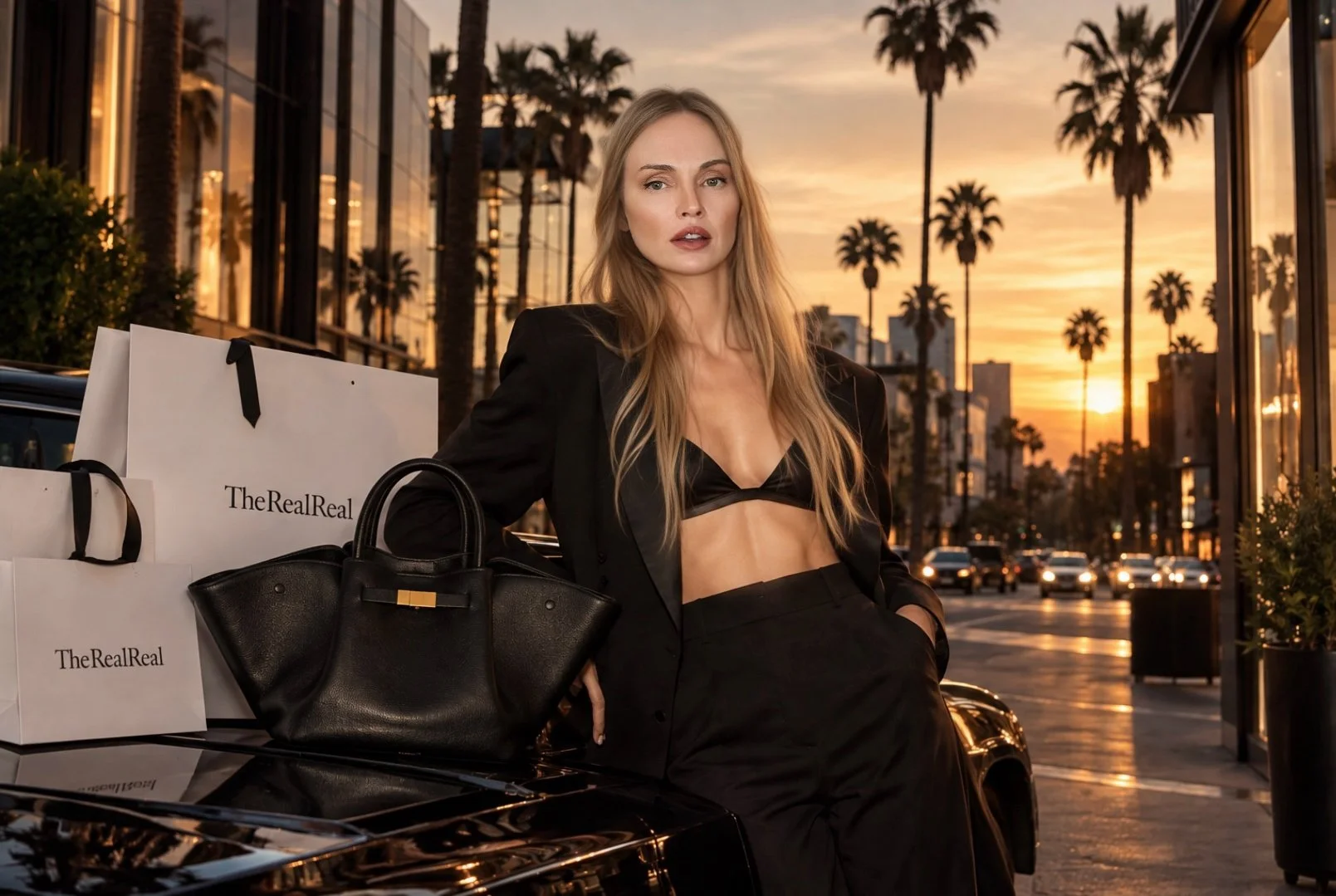
A well-built wardrobe does not need to be replaced all the time.
That is sustainability in its purest form.
~ Anya Angjeli
Personal Stylist and Image Consultant