

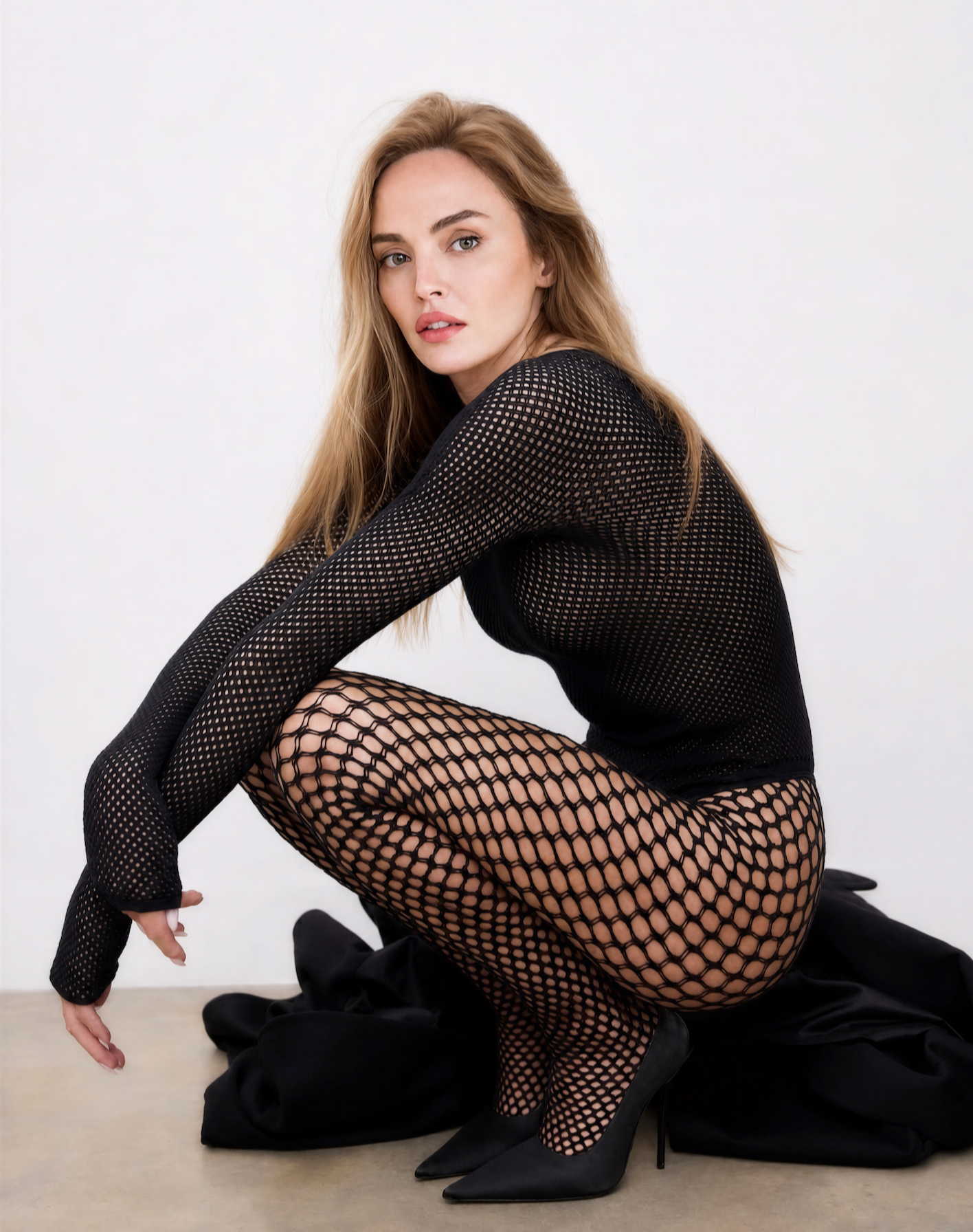
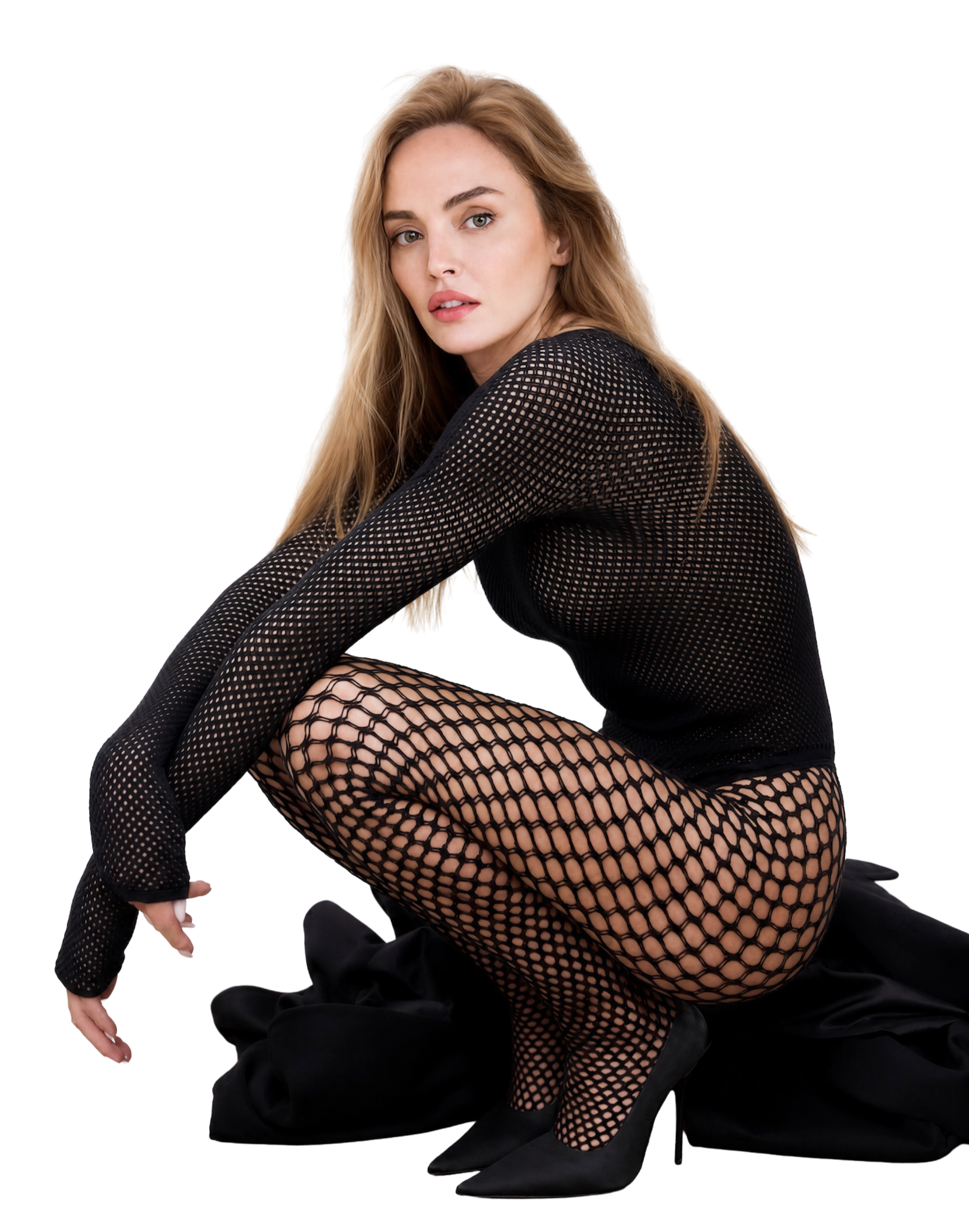
about me
I was always a creative at heart. Growing up in Russia during the nineties, art was my refuge — I would sit for hours painting, transported somewhere else. When I was twelve, my work was featured in a local newspaper. It was the first time I felt the thrill of my talent being acknowledged, and I was hooked.
I was a small child when the Soviet Union collapsed and we finally started getting goods from the West. I remember the novelty of acid wash jeans felt like discovering color for the first time. But Western goods were impossibly expensive. A pair of Levi's cost around 200 Rubles — over a month's salary for an average engineer. Fashion existed in magazines I could look at but never touch.
So I learned to sew. My grandmother was a seamstress and she taught me. I would take my mother's old clothes and transform them into something entirely new. People would stare because they'd never seen anything like it. I wasn't sure if they thought I looked ridiculous or if they were admiring me — but I didn't care. I loved having my own style, and I loved that I had made it. That experience led me to discover a talent I did not know I had: the ability to create something out of nothing, because I had a vision.
the beginning
Style is not about how much you can spend.
It's about knowing how to work with what you've got.
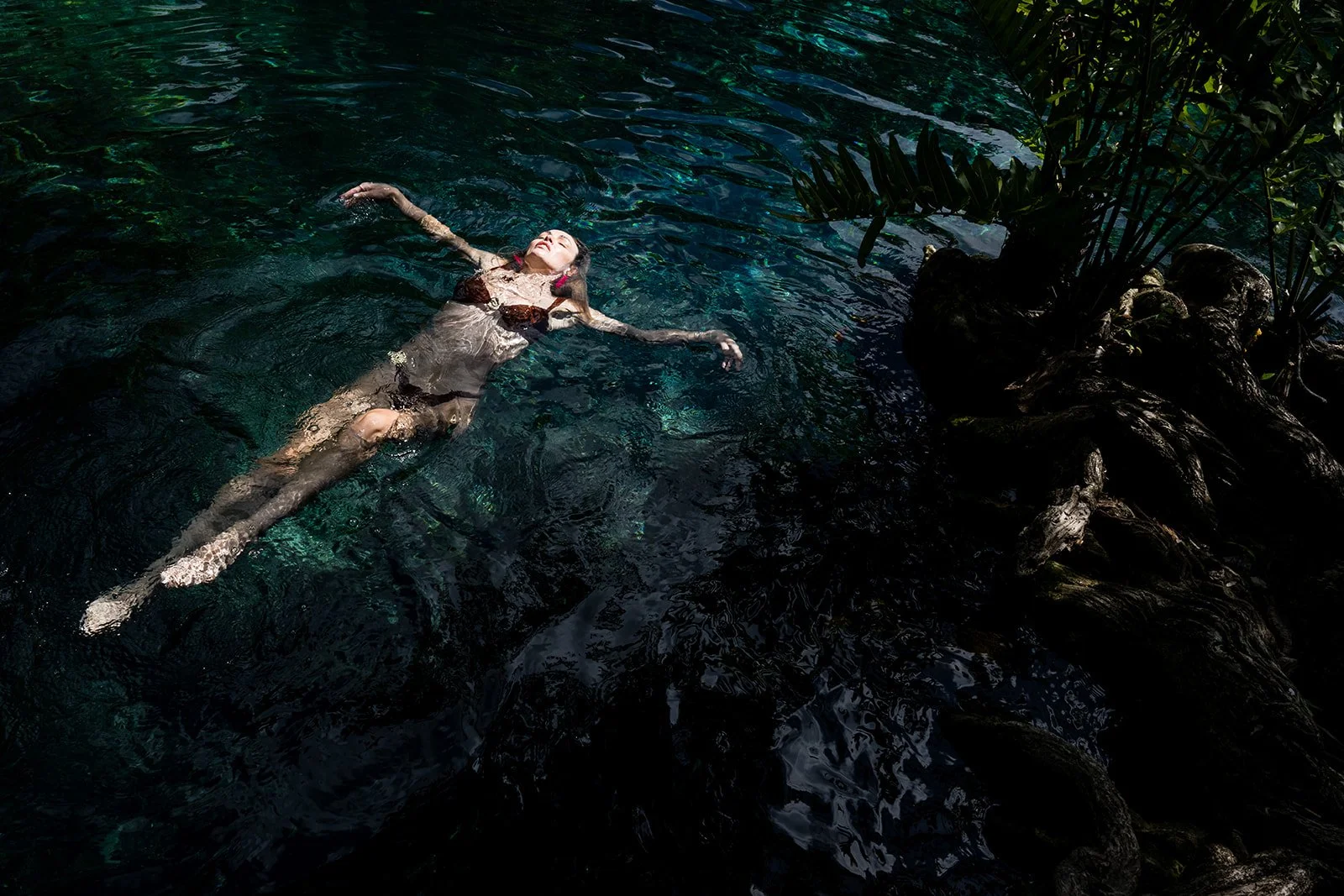
coming to america
When I moved to the U.S., I landed in a Midwestern high school. Fitting in as a teenage girl from Eastern Europe in Minnesota wasn't easy. European style was about two years ahead of the U.S., and I dressed the same way I had back home. This time I knew for sure people were making fun of me — but although it's very hard to be a teenage girl not speaking the language and dressed like she's from another planet, I was not interested in fitting in with people who don't share my vision.
The moment I finished high school, I packed my bags and moved to New York City to pursue modeling.
2 decades in nyc
NYC shaped me in ways I didn't fully understand until years later. I spent two decades immersed in one of the world's most demanding aesthetic environments — working alongside people who set the standard for what beauty, style, and image actually mean at the highest level.
As a model, I worked with photographers whose names define the industry — Max Vadukul, the second staff photographer in The New Yorker's history after Richard Avedon, renowned for his iconic black-and-white portraiture; Fadil Berisha, official photographer for Miss Universe and Rolex, with editorial credits across Vogue, Harper's Bazaar, and Vanity Fair; Udo Spreitzenbarth, whose fashion and beauty work appeared in international editions of Vogue, Elle, and Marie Claire; and Antoine Verglas, the Paris-born photographer nicknamed "the photographer of top models," known for his signature intimate portraits of the world's most celebrated women. I was also a face for L'Oréal Hair Color, and my image was in the window of Pierre Michel Salon on Lexington and 59th — one of the most storied addresses in New York.
Competition was always steep, and I quickly learned what makes a person command attention, what the difference is between someone who looks like they belong and who does not.
That experience can not be replicated by an educational institution, and it can not be bought. It takes years of being around the best, watching closely, and absorbing.
Little by little, my taste crystallized. But the high cost of living in New York made it impossible to pursue fashion full time, so I spent years selling real estate between modeling jobs — building discipline, learning how to read people, and quietly absorbing everything around me. I also completed a Real Estate Investment and Development Program through eCornell, which sharpened the business mind behind the creative one.
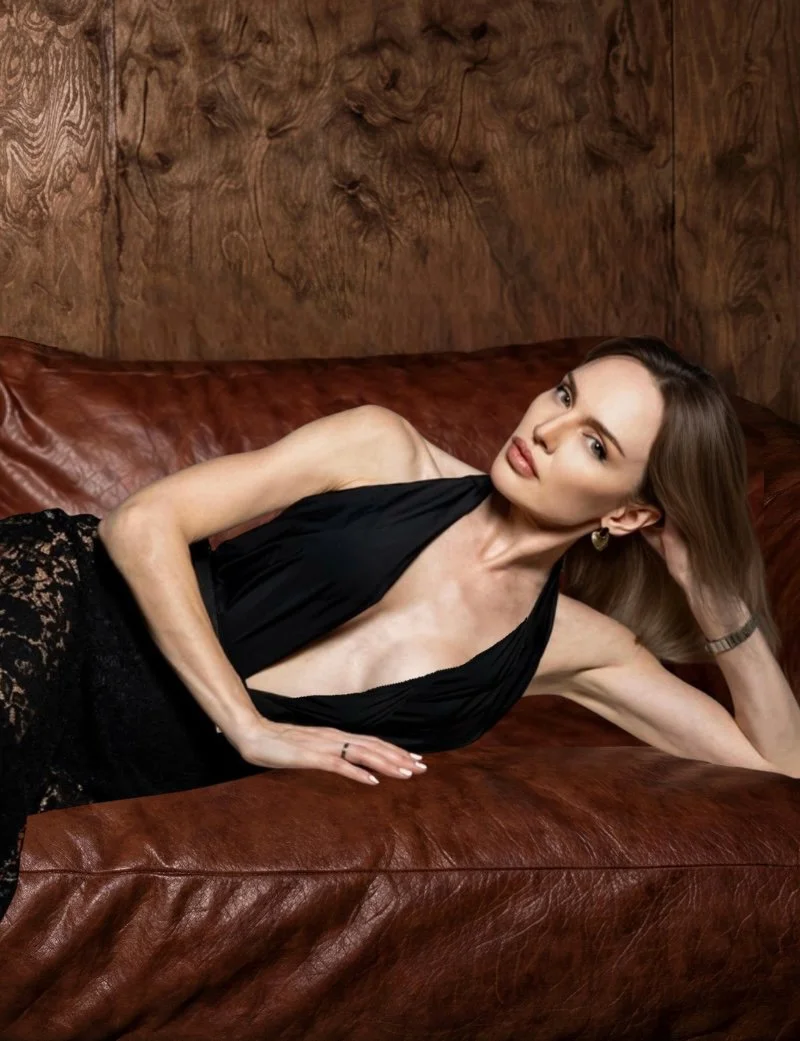
what inspires me
My work is deeply influenced by Yves Saint Laurent, Alexander McQueen, Balmain, and Helmut Newton. Each represents something I connect with on a fundamental level — not as trends to observe from a distance, but as a way of understanding what clothing can actually do to a person.
Saint Laurent, for the architectural precision, the power of a perfectly cut tuxedo on a woman, the idea that true elegance is never loud. McQueen, because his work proved that fashion can be dark and romantic and genuinely unsettling — and still be breathtaking. Balmain, for its unapologetic maximalism, for the way a strong silhouette changes how you carry yourself the moment you put it on. And Helmut Newton, whose photography understood that confidence and sensuality are not opposites — they have always been the same thing.
“For a woman, the tuxedo is an indispensable garment in which she will always feel in style,
for it is a stylish garment and a not a fashionable garment.
Fashions fade, style is eternal.”
~ Yves Saint Laurent
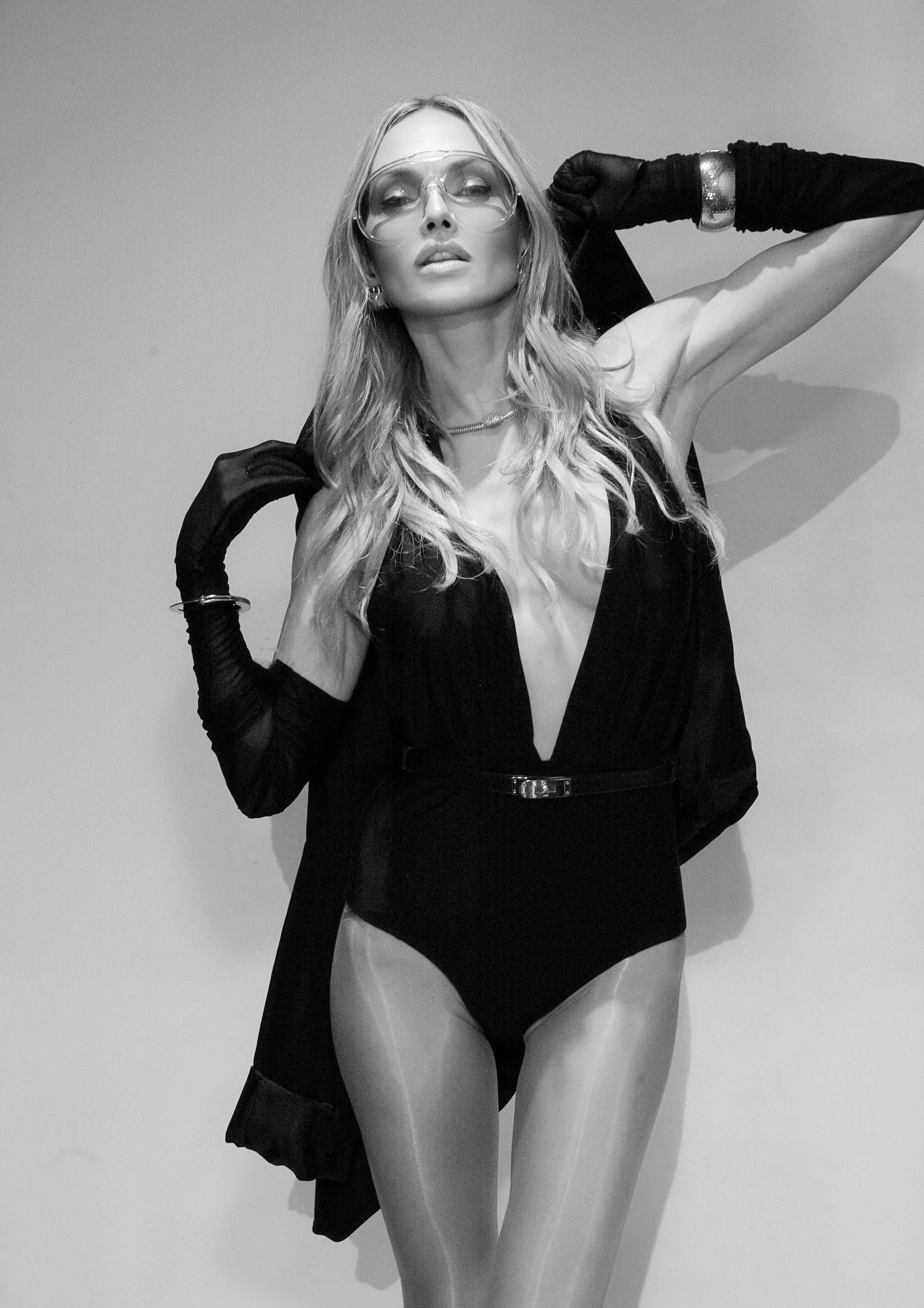
discovering The Power of the Female Form
Later in life, I made a deliberate choice to explore something I had long believed but never fully articulated: that a woman's body is something to be celebrated, not hidden. Working with Antoine Verglas — who understood this better than almost anyone — led to my work being published in Maxim and French Playboy.
That experience deepened a conviction I carry into every styling session:
how a woman feels in her own body is the foundation of how she presents herself to the world. Style begins there — not in a wardrobe.
It also inspired my private boudoir work — intimate sessions I style and photograph myself for women who want to feel undeniable in photos meant only for the one who admires them.
My style is a little daring, 100% unapologetic and always sophisticated.
building angjel’s method
It is ironic that it wasn't until I moved to Austin, Texas, that I finally had the opportunity to follow my natural talent and solidify my path in fashion — this time not just in front of the camera, but behind it as well.
A photographer friend, Svetlana Frolova, invited me shopping one afternoon, asking me to help her pick some outfits. I grabbed a few things off the rack — quickly, instinctively — and she was amazed at how fast I put together something she never would have picked out herself. Immediately, she declared I had a natural talent, and asked me to start styling her and her clients.
Soon after that, other people started reaching out. One thing led to another, and I found myself being credited as both model and stylist in fashion magazines — something that, in hindsight, was probably always where I was headed.
I founded Angjel's Method as a personal styling and image consulting practice — it’s my creative outlet that I love, the way I loved painting when I was 12.